Sofia Neighborhoods: Essential Field Takeaways (2026)
- Low Violent Crime: Sofia ranks among Europe's safest capitals. Violent street assaults on foreign travelers are statistically rare, well below crime statistics in Paris, London, or Barcelona.
- Top Neighborhoods to Stay: Center (Център) for historic walking convenience; Oborishte for upscale European bistros and diplomatic calm; Lozenets for green tree-lined hilly avenues.
- The Yellow Cobblestones (Жълти павета): Historic Austro-Hungarian ceramic pavers that define the government and museum corridor along Tsar Osvoboditel Boulevard.
- Fakulteta (Факултета) Reality: An insular Romani community of ~40,000 residents. Safe from violent crime during the day, but lacks tourist infrastructure, paved roads, and street lighting. Not recommended for casual solo wandering without a local cultural guide.
- Taxi Vigilance: Avoid counterfeit cabs mimicking Yellow Taxi (+359 2 91119). Remember that Uber does not exist in Bulgaria (Sofia Transit & Taxi Guide).
1. Downtown Center (Център): The Cultural & Historic Heart
Sofia's historic center is organized in concentric rings framed dramatically against the northern granite wall of Mount Vitosha. The district represents an extraordinary architectural collision: 4th-century Roman ruins sit beneath glass street plazas, surrounded by Viennese Secession townhouses, Ottoman stone mosques, gilded Orthodox basilicas, and monumental socialist neoclassical ministries.
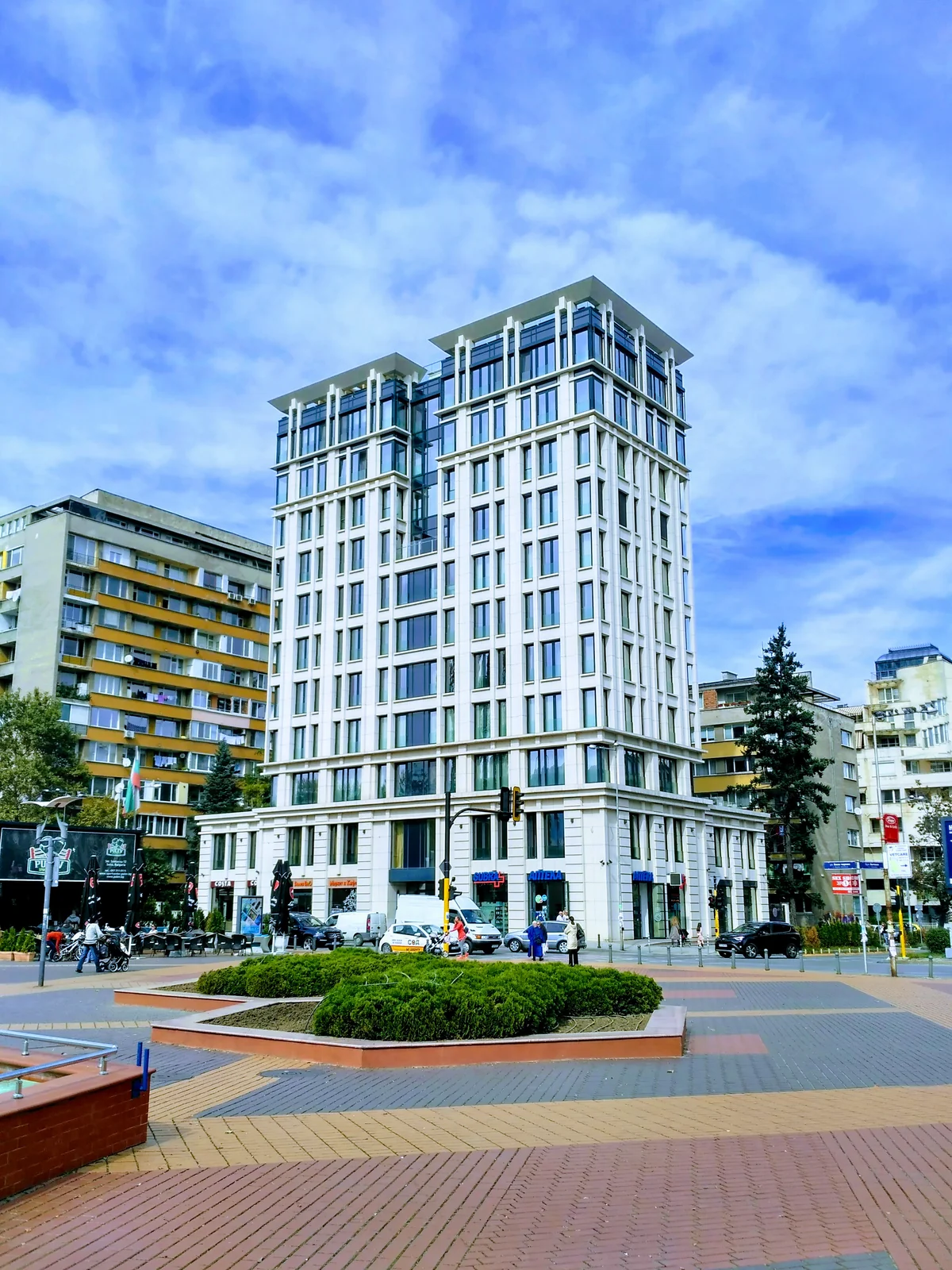
Key Downtown Streets & Corridors
- Vitosha Boulevard (Булевард Витоша): Sofia's vibrant pedestrian spine, lined with outdoor terrace cafes, gelato bars, and designer fashion boutiques, terminating with a direct axial view of snow-capped Vitosha.
- Tsar Osvoboditel Boulevard & The Yellow Cobblestones: Paved with Austro-Hungarian ceramic clay bricks in 1907, this grand boulevard passes the Bulgarian Academy of Sciences, the National Assembly, the Russian Church of St. Nicholas, and St. Alexander Nevsky Cathedral.
- Tsar Ivan Shishman Street: Sofia's bohemian and artistic artery. Packed with independent bookshops, artisan bakeries, organic wine bars, and street-art-adorned electrical distribution boxes.
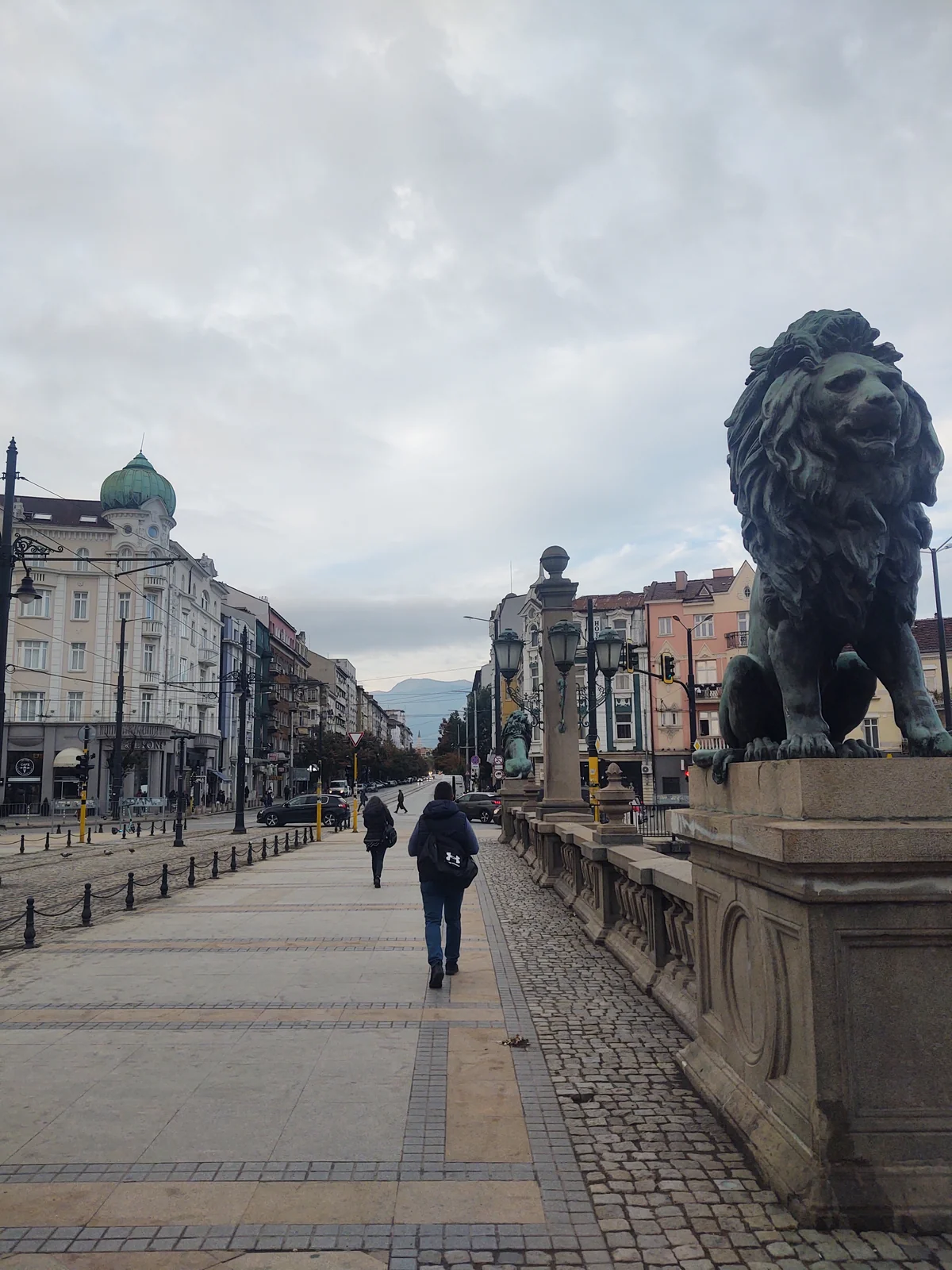
- Lions' Bridge (Лъвов мост): Built in 1891 by Czech engineer Václav Prošek, this historic stone bridge spans the Vladayska River, guarded by four monumental bronze lions cast in Vienna.
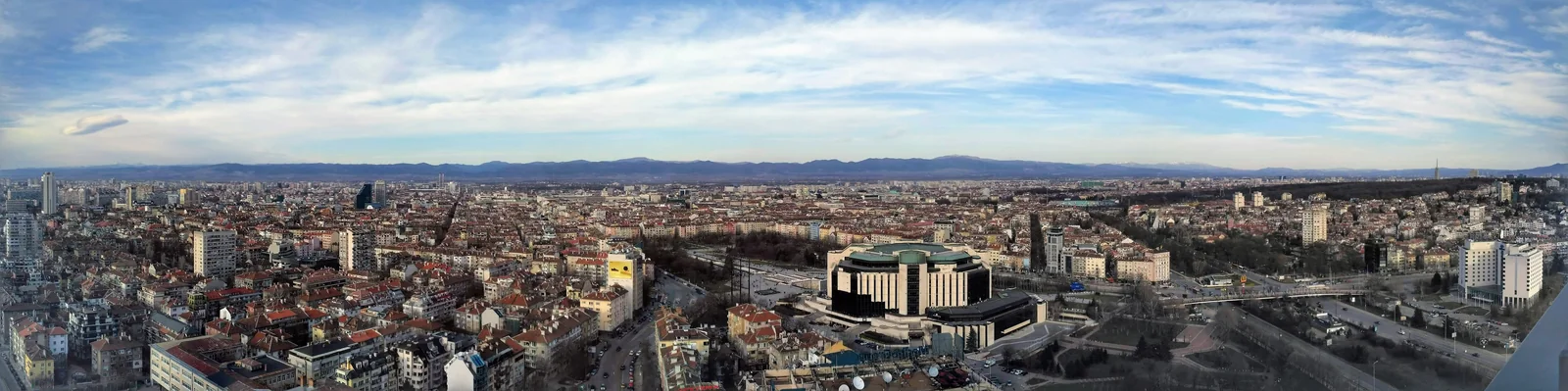
2. Oborishte & Lozenets: Aristocratic Elegance & Green Charm
Oborishte (Оборище)
Stretching eastward from St. Alexander Nevsky Cathedral to the military academy park, Oborishte is Sofia's most prestigious and refined historic quarter. Tree-shaded streets are lined with foreign embassies, pre-war residential villas, and independent art galleries.
Centering around Doctors' Garden (Докторска градина), the district is the epicentre of Sofia's specialty coffee scene (Drekka, Chucky's), upscale European brunch bistros, and sophisticated French wine cellars. It is quiet, extraordinarily safe, and a 5-minute walk to all major museums.
Lozenets (Лозенец)
Perched on the rolling hills immediately south of the Perlovska River canal, Lozenets is divided into 'Lower Lozenets' (historic, architectural, walkable to NDK) and 'Upper Lozenets' (modern, affluent residential high-rises).
Renowned for its lush greenery, artisanal Italian gelaterias, and boutique family mehanas, Lozenets borders both Borisova Gradina and South Park. The district is served by Metro Line 2 (European Union & James Bourchier stations).
3. Boyana & Studentski Grad: Sub-Alpine Serenity vs. Campus Energy
- Boyana & Dragalevtsi (Бояна / Драгалевци): Situated directly at the foothills of Mount Vitosha, Boyana is Sofia's affluent suburban enclave. Known for crisp alpine air, dense pine forests, luxury diplomatic residences, and two of Bulgaria's greatest national treasures: the UNESCO-listed 1259 frescoes of Boyana Church and the colossal National Historical Museum inside Todor Zhivkov's former socialist residence. Reached easily via Yellow Taxi (~€7.00–€10.00 from center) or municipal Bus 63/64.
- Studentski Grad (Студентски град): Built during the 1960s to centralize Bulgaria's university student body, this high-density district houses over 40,000 students across dozens of high-rise dormitories. It features 24-hour banitsa bakeries, student mehanas with €4.00 lunch menus, billiards halls, and the city's largest concentration of late-night nightclubs and chalga clubs. It is loud, chaotic, safe, and fascinating for young backpackers.
4. Fakulteta & Filipovtsi (Roma Quarter): An Objective Deep-Dive
Situated in Sofia's western Krasna Polyana municipality, Fakulteta (Факултета) is one of the largest and most densely populated self-contained Romani (Roma / Gypsy) communities in Southeast Europe, with an estimated population of 35,000 to 45,000 residents.
Understanding Fakulteta: Facts Beyond Clichés
Fakulteta developed in the 1930s as a seasonal settlement and expanded rapidly under 1960s socialist industrialization policies. The quarter is characterized by extreme internal economic dichotomy. Along the paved main artery of Suhodolska Street, visitors see multi-story palatial villas with neoclassical pediments, gilded iron gates, and luxury sedans owned by prosperous music producers, merchants, and international entrepreneurs. In stark contrast, the interior unpaved alleys (mahala) consist of informal, self-built brick and tin dwellings with inadequate municipal infrastructure.
Safety Realities: Is Fakulteta Safe?
Fakulteta is not an armed violent enclave akin to Latin American favelas or South African townships; violent crimes against outsiders are statistically rare. However, it is an insular, tightly knit traditional community with distinct cultural norms:
- No Tourist Infrastructure: Fakulteta has no museums, English street signage, boutique cafes, or tourist offices. Roads in the interior are unpaved, deeply rutted, and often flooded during spring thaw.
- Territorial Guard Dogs: Stray and free-roaming guard dogs are widespread along the unpaved interior alleys and peripheral railway tracks, presenting a genuine bite risk to unfamiliar pedestrians.
- Photography Sensitivities: Pointing cameras or smartphones at residents, children, or private homes without explicit personal permission is seen as intrusive and disrespectful, and will provoke verbal confrontations.
- Practical Rule for Travelers: Casual self-guided solo walking tours are strongly discouraged. If you are an academic researcher, journalist, or traveler interested in the world-renowned Romani musical traditions (the brass orchestras and roots of Balkan ethno-folk), arrange a visit through an accredited local NGO, social enterprise, or cultural community liaison.
- Transit & Taxis: Never walk through peripheral railway crossings or derelict industrial wasteland near Fakulteta at night. If transiting nearby, take an official Yellow Taxi (+359 2 91119) along main boulevards (Nikola Mushanov, Suhodolska).
5. General City Safety, Common Petty Scams & Emergency Protocol
Throughout the rest of Sofia, crime levels are remarkably low. Nevertheless, travelers should remain alert to common urban petty scams:
1. Pickpocket Hotspots
Pickpockets operate in organized teams primarily on crowded surface transport lines: Tram Line 20 and Line 22 near Women's Market (Zhenski Pazar), and around the pedestrian underpasses of the Central Railway Station. Keep zipped bags held in front of you and never keep smartphones in loose back pockets.
2. Fake Taxi Impersonators
Rogue drivers park near transit hubs with vehicles imitating official fleets (using phone numbers like 91118 instead of 91119). They charge up to €10.00 per kilometer. Always book via the Yellow! Taxi app or call +359 2 91119 (Sofia Taxi Guide).
Essential Emergency Contacts in Sofia
- Universal European Emergency Dispatch: 112 (English-speaking operators for Police, Ambulance, and Fire)
- Sofia Traffic & Public Mobility Centre (TsGM): +359 700 13 233
- Official Yellow Taxi Dispatch: +359 2 91119 (yellowtaxi.net)
- British Embassy Sofia: 9 Moskovska Street – Tel: +359 2 933 9222
- United States Embassy Sofia: 16 Kozyak Street, Lozenets – Tel: +359 2 937 5100
- 24-Hour Emergency Dental Clinic: Faculty of Dental Medicine, 1 Georgi Sofiyski Blvd
Explore Sofia's Historic Neighborhoods Safely on Foot
Discover the architectural secrets of the Downtown Center, the yellow cobblestones, and the ancient ruins of Serdica with certified local guides on the top-rated Free Sofia Tour.
Frequently Asked Questions: Sofia Neighborhoods & Safety
Oborishte (near Doctors' Garden) and Lower Lozenets are universally regarded as Sofia's safest and most pleasant neighborhoods. Both are upscale, leafy, diplomatic quarters with excellent lighting, boutique bistros, and zero rowdy nightlife. Downtown Center is also very safe and offers unmatched walking access to all major sights.
Yes, during daytime hours, Women's Market (Женски пазар) on Stefan Stambolov Boulevard is a vibrant, safe, and culturally rich farmers' market filled with fresh fruit, spices, artisanal cheeses, and traditional pottery. However, keep a firm hand on your wallet or purse as pickpockets occasionally target distracted shoppers, and avoid lingering in the dark back alleys after sunset.
No. Unsolicited photography of homes, children, or residents in Fakulteta is considered intrusive and disrespectful. If you are participating in a legitimate cultural or musical tour with a local community guide, always ask for explicit permission before taking pictures.
Over the last decade, Sofia Municipality's extensive trap-neuter-vaccinate-release program has reduced the central stray dog population by over 90%. In the historic center, Oborishte, and Lozenets, stray dogs are virtually non-existent. In peripheral industrial zones, rail yards, and the foothills of Vitosha, occasional stray or semi-feral pack dogs can be encountered; avoid approaching them or running past them aggressively.
By Bulgarian law, all taxi journeys must be metered. If a driver claims the meter is broken or demands a flat cash rate, say politely 'Pusnete aparata, molya' (Turn on the meter, please). If they refuse, immediately decline the ride and step out of the vehicle. Always book through the Yellow! Taxi app (+359 2 91119) where the route and tariff are tracked digitally.