The 1259 Masterpieces of Boyana: Predating Giotto by Decades
Nestled within a tranquil, towering cedar and sequoia park in the upscale southern suburb of Boyana at the base of Mount Vitosha, the Boyana Church (Boyanska Tserkva) is one of only ten UNESCO World Heritage sites in Bulgaria. From the outside, the two-story structure appears modest—a compact assemblage of red brick, mortar, and local stone constructed across three historical phases spanning the late 10th century to the mid-19th century.
Once you step through the hermetically sealed climate doors into the darkened medieval nave, the monumental artistic triumph of the Second Bulgarian Empire becomes immediately evident. In 1259 CE, an anonymous master painter—assisted by senior workshop artists of the Tarnovo Artistic School—covered the walls and vaulted ceiling with 89 distinct biblical scenes containing over 240 individual human portraits.
What elevated Boyana Church to UNESCO World Heritage status in 1979 is its profound departure from the flat, two-dimensional, stiffly hierarchical aesthetic of standard Byzantine iconography. Completed in 1259—decades before Italian masters Cimabue and Giotto began painting in Florence and Padua—the Boyana Master infused sacred figures with startling anatomical vitality, deep psychological realism, and individual emotional sorrow. The donor portraits of Sebastokrator Kaloyan (cousin of the Bulgarian Tsar and governor of the Sredets region) and his wife Desislava are widely regarded as the most accomplished realistic royal portraits surviving from 13th-century Europe. Desislava's noble posture, delicate facial modeling, and velvet gown adorned with gold thread reflect an extraordinary level of secular courtly refinement.
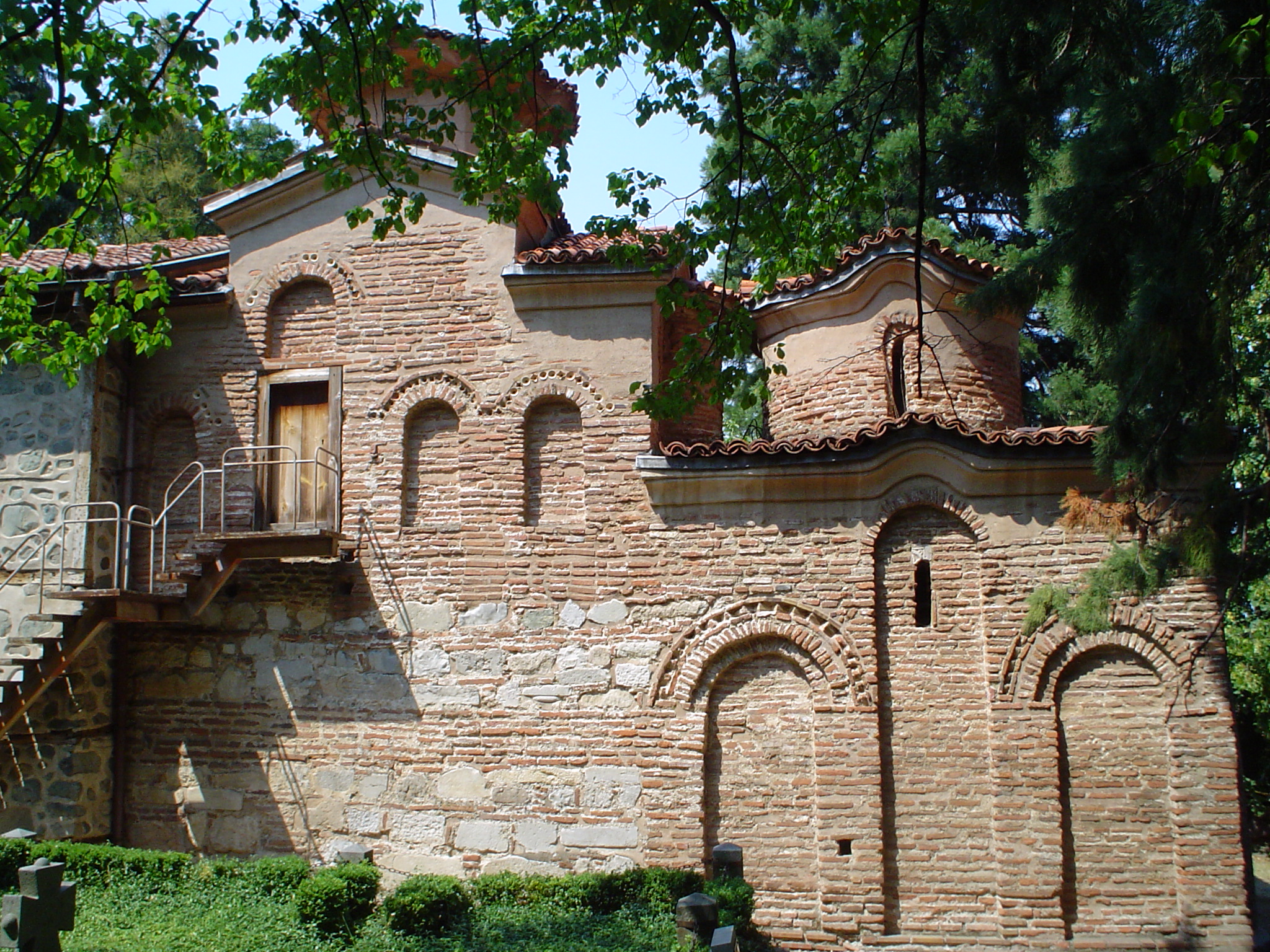
The 8-Person, 10-Minute Rule: Why and How It Works
Visitors unfamiliar with the site are often startled to learn that access to Boyana Church is governed by some of the most rigorous microclimate regulations in Europe:
- Group Limit: Exactly 8 to 9 visitors are permitted inside the medieval chamber simultaneously.
- Time Limit: A digital countdown timer set to exactly 10 minutes begins the moment the heavy inner door is sealed. When the buzzer sounds, docents usher the group out to allow fresh air cycles.
- Microclimate Sensors: Automated dehumidifiers and temperature regulators maintain constant parameters of 17°C to 18°C and 55% to 65% relative humidity. Even brief increases in exhaled moisture from larger crowds would cause salt efflorescence on the delicate egg tempera paint.
- Photography Ban: Absolutely no cameras or mobile phone photography are allowed. Flash light causes photo-oxidation of organic pigments, while non-flash phone holding disrupts the tight 10-minute flow.
The National Historical Museum (NMH): Todor Zhivkov's Residence
Just 1.5 kilometers downhill from Boyana Church, situated at 16 Vitoshko Lale Boulevard, stands the colossal National Historical Museum (Natsionalen Istoricheski Muzey). The building itself is an architectural spectacle: completed in 1974, it served as Government Residence No. 1 (Rezidentsiya Boyana) for long-time communist dictator Todor Zhivkov. It features imposing Socialist-Realist marble colonnades, carved walnut ceilings, and gigantic panorama windows looking out toward the rocky summit of Mount Vitosha.
Today, the museum holds over 650,000 historical artifacts tracing human history on Bulgarian soil from 6,000 BCE to 1989. The crowning glory of the collection is Hall 2, which houses the world-famous Panagyurishte Gold Treasure (Panagyursko Zlatno Sakrovishte):
★ The Panagyurishte Gold Masterpiece (4th–3rd Century BCE)
Unearthed accidentally in December 1949 by three brickmaker brothers near the town of Panagyurishte, this ceremonial Thracian banquet drinking service consists of 9 vessels of pure 24-karat gold with a total weight of 6.164 kilograms.
It includes three rhytons sculpted as animal heads (stag, ram, and doe), one rhyton shaped as the forepart of a roaring lion, three anthropomorphic oenochoes formed as helmeted goddesses (Athena, Hera, and Aphrodite), a phiale decorated with 72 African heads, and a magnificent 3.1-kg amphora-rhyton depicting the Seven Heroes against Thebes.
Double UNESCO Excursion: Boyana Church + Rila Monastery
Combine Bulgaria's two UNESCO World Heritage landmarks in a seamless, stress-free day trip with hotel pickup and pre-arranged entry.
 ⭐ #1 Regional Bestseller & UNESCO Double-Site
Rila Monastery & Boyana Church Full-Day UNESCO Tour
- Two UNESCO World Heritage Sites visited in a single seamless full-day excursion
- Boyana Church: Rare 1259 Pre-Renaissance mural frescoes predating Giotto
- Rila Monastery: Bulgaria's spiritual jewel with black-and-white striped cloisters
Exclusive Access & Interior Hidden Gems
Sofia Insider Tour with Peter (Places with limited access)
- Exclusive interior access to restricted heritage spaces and hidden chapels
- Vintage Sofia tram ride through historic residential neighborhoods
- Intimate small-group setting ensuring personalized storytelling
Rila Monastery & Boyana Church Full-Day UNESCO Tour
Two UNESCO World Heritage Sites visited in a single seamless full-day excursion
Frequently Asked Questions About Sofia
Verified answers to practical visitor inquiries regarding Sofia tourism, prices, safety, and cultural etiquette.
Take Metro Line 2 (Blue Line) south to the terminus at Vitosha Metro Station (Paradise Center). Exit toward bul. Cherni Vrah and take municipal Bus 64 to the 'Boyansko Hanche' stop (approx. 20-minute ride). From the bus stop, walk 200 meters up the cobblestone lane through the park to the church entrance gate. The transit fare is €0.80 per ride or covered under the €2.00 daily transit cap.
The frescoes painted in 1259 CE are extremely sensitive to moisture, exhaled carbon dioxide, and temperature fluctuations. The Bulgarian Ministry of Culture installed specialized climate-control equipment that maintains internal relative humidity at exactly 55–65% and temperature at 17–18°C. Allowing more than 9 visitors or longer visits would cause condensation to deposit on the medieval plaster.
Yes, absolutely. They complement each other perfectly. The €7.00 combo ticket saves money, and the National Historical Museum is housed inside the surreal socialist palace of dictator Todor Zhivkov at the foot of Vitosha, displaying world-renowned Thracian gold treasures including the Panagyurishte rhytons.
Yes, this is the most popular day tour in Bulgaria. The full-day UNESCO excursion departs central Sofia at 09:00 AM, visits Boyana Church first for the 10-minute private viewing, then drives through the Rila mountains to spend 3 hours at Rila Monastery, returning by 17:30. Pricing starts around €23.70 per person.
Tickets can be purchased directly at the on-site ticket kiosk at the garden gate via cash or contactless bank card. During summer weekends, long queues can form because only 40 to 50 visitors can cycle through per hour. Arrive at 09:30 AM or book a skip-the-line day tour to guarantee entry.