Frequently Asked Questions About Sofia (2026)
Click any inquiry below to reveal verified answers mined from local municipal registers, transit archives, and cultural historians.
Frequently Asked Questions About Sofia
Verified answers to practical visitor inquiries regarding Sofia tourism, prices, safety, and cultural etiquette.
Yes, Sofia is one of Europe's most rewarding, historically layered, and budget-friendly capital cities. It synthesizes over 7,000 years of civilization—spanning Neolithic settlements, Roman Ulpia Serdica, Ottoman architecture, and monumental Socialist Realism—framed directly against the 2,290-meter alpine backdrop of Mount Vitosha. In 2026, Sofia offers pristine safety, flourishing culinary mehanas, and remarkable public transit capped at €2.00 per day.
The definitive top 10 attractions include: (1) St. Alexander Nevsky Patriarchal Cathedral, (2) Boyana Church UNESCO 1259 frescoes, (3) The excavated Roman ruins of Ancient Ulpia Serdica, (4) Church of Saint George Rotunda (4th century), (5) Mount Vitosha alpine hike to Cherni Vrah, (6) Regional History Museum inside Central Mineral Baths, (7) Central Market Hall (Tsentralni Hali), (8) The Largo Socialist Classicist ensemble, (9) The National Historical Museum with the Panagyurishte Gold Treasure, and (10) Taking a tip-based Free Sofia Walking Tour.
Do not miss walking across the iconic Austro-Hungarian yellow ceramic cobblestones (Zhalti Paveta) outside the National Assembly, exploring the underground late-Roman necropolis beneath Saint Sofia Basilica, drinking hot mineral water from the 46°C geothermal spring taps behind the Central Baths, and enjoying freshly baked banitsa with cold ayran at a neighborhood bakery.
Yes, Bulgaria is exceptionally welcoming and warm toward American travelers, who are embraced with sincere Balkan hospitality. Bulgaria has been a steadfast NATO ally since 2004 and a European Union member since 2007. American visitors do not require a visa for tourist stays up to 90 days within any 180-day period. Most younger Bulgarians are fascinated by American culture, and US embassy support in Sofia is robust.
Travelers should be cautious of: (1) Counterfeit airport taxi operators mimicking 'OK Supertrans' with fraudulent names like 'OK Superchans'; (2) Pickpocketing on crowded surface lines (specifically Tram 20 and 22 near Zhenski Pazar); (3) Uneven sidewalks and loose cobblestones requiring sturdy walking shoes; and (4) The traditional Bulgarian head nod paradox, where a subtle head shake can mean 'yes' and a nod can mean 'no' among older locals.
Yes. You can travel easily throughout Sofia using English. English is widely and fluently spoken by younger Bulgarians, university students, hotel concierges, restaurant servers, museum staff, and tour guides. Public transit ticket vending machines, airport signage, and metro announcements are fully bilingual in Bulgarian Cyrillic and English. In rural mountain villages, having Google Translate or knowing basic Bulgarian greetings is helpful.
The quintessential Bulgarian breakfast is banitsa—a flaky pastry made of layered filo dough filled with whisked farm eggs, Bulgarian yogurt, and crumbly white brined cheese (sirene), baked until golden-crisp. It is almost always paired with either ayran (cold, salted yogurt drink) or boza (sweet-and-sour fermented malt beverage). The entire meal costs €1.25 to €2.00.
The informal and most common way to say 'hi' or 'hello' among friends is Zdravey (Здравей) to one person, or Zdraveyte (Здравейте) as a polite or plural greeting. You can also casually say Chao (Чао) for goodbye, or Blagodarya (Благодаря) for thank you.
Under Cold War terminology, Bulgaria was historically classified as a 'Second World' nation aligned with the Soviet Union and Warsaw Pact from 1944 to 1989. Today, those geopolitical labels are obsolete. Modern Bulgaria is an established member of the European Union (joined 2007), NATO (joined 2004), and the Schengen Area (2024), classified by the World Bank and United Nations as a high-income, developed economy with high human development.
Beyond the main monuments, enjoy: (1) Ascending Mount Vitosha by Bus 66; (2) Visiting the Museum of Socialist Art sculpture park; (3) Browsing the Roman Wall beneath Central Market Hall; (4) Sampling indigenous Mavrud wine in a boutique cellar; (5) Watching speed chess in the City Garden; (6) Snapping photos of post-socialist sidewalk klek shops; (7) Visiting the Sofia Synagogue; (8) Relaxing in Borisova Gradina park; (9) Taking a day trip to Rila Monastery; and (10) Joining an evening craft beer pub crawl.
Follow our 3-day field blueprint: Day 1 covers central architectural landmarks (Free Sofia Tour, Alexander Nevsky Cathedral, Roman Serdica underpass, St. George Rotunda, and Vitosha Blvd). Day 2 explores sub-Vitosha UNESCO Boyana Church, the Panagyurishte Gold at the National History Museum, and hiking Cherni Vrah or Golden Bridges. Day 3 is dedicated to a day excursion to UNESCO Rila Monastery or Plovdiv Old Town.
Sofia is among the most affordable and budget-friendly capital cities in the entire European Union. A single metro ticket is €0.80, a 24-hour transit cap is €2.00, a three-course traditional tavern dinner for two with wine costs €30.00–€40.00, and museum entry ranges from €3.00 to €10.00. Travelers enjoy Western European safety and comfort at a fraction of the price.
Yes. Sofia has a massive IT and tech outsourcing industry, several prominent universities, and a thriving international expat community. English is spoken comprehensively across the central districts, hotels, restaurants, bars, and museums.
Sofia is statistically exceptionally safe. Violent crime against tourists is virtually non-existent. Solo female travelers and families routinely walk through the city center, Vitosha Boulevard, and major public parks late into the evening without concern. Normal precautions against pickpockets on crowded trams and checking taxi meters are all that is required.
May, June, September, and October are the best months to visit Bulgaria. During these shoulder months, temperatures range between a pleasant 20°C and 26°C, gardens are lush, outdoor cafes are buzzing, and mountain hiking trails on Vitosha and Rila are accessible without excessive midsummer heat. For skiing enthusiasts, January and February offer great powder on Mount Vitosha and Bansko.
Recommended Experiences to Complete Your Trip
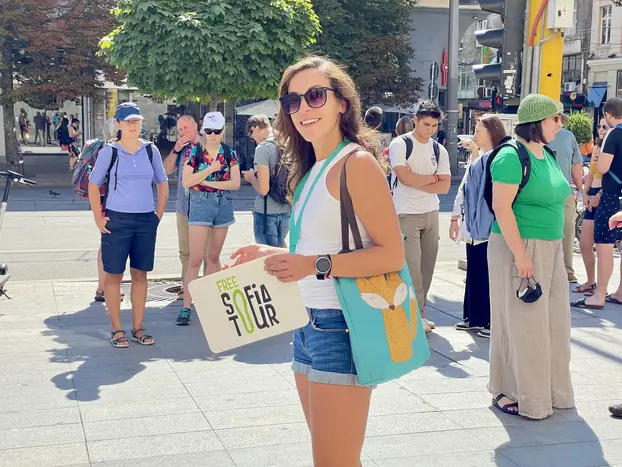
Free Sofia Walking Tour (Top Rated Historic Highlights)
- Palace of Justice meeting point with English-speaking licensed guide
- Sveta Nedelya Cathedral & Church of St. Petka of the Saddlers
- Ancient Serdica complex ruins & Largo Roman decumanus
 Exclusive Access & Interior Hidden Gems
Sofia Insider Tour with Peter (Places with limited access)
- Exclusive interior access to restricted heritage spaces and hidden chapels
- Vintage Sofia tram ride through historic residential neighborhoods
- Intimate small-group setting ensuring personalized storytelling
⭐ #1 Regional Bestseller & UNESCO Double-Site
Rila Monastery & Boyana Church Full-Day UNESCO Tour
- Two UNESCO World Heritage Sites visited in a single seamless full-day excursion
- Boyana Church: Rare 1259 Pre-Renaissance mural frescoes predating Giotto
- Rila Monastery: Bulgaria's spiritual jewel with black-and-white striped cloisters
Top Local Gastronomy Pick
Sofia Wine & Cheese Tasting Experience
- Guided tasting of 5 indigenous Bulgarian wine varietals (Mavrud, Rubin, Melnik, Rikat, Pamid)
- Pairing with artisanal local Bulgarian cheeses, charcuterie, and fresh breadsticks
- Sommelier narrative covering Bulgaria's 5,000-year Thracian winemaking roots
Free Sofia Walking Tour (Top Rated Historic Highlights)
Palace of Justice meeting point with English-speaking licensed guide