The 16th Soviet Republic: Bulgaria Under 45 Years of Socialism
Between September 9, 1944 and November 10, 1989, the People's Republic of Bulgaria (Narodna Republika Balgariya) occupied a unique and fiercely loyal position within the Soviet sphere of influence. Under leaders Georgi Dimitrov (former head of the Comintern), Valko Chervenkov, and especially Todor Zhivkov—who maintained absolute power for 35 consecutive years from 1954 to 1989—Bulgaria was widely perceived as Moscow's most dependable Warsaw Pact satellite. Indeed, on two separate occasions in 1963 and 1973, Zhivkov secretly proposed to Soviet Premier Nikita Khrushchev and Leonid Brezhnev that Bulgaria formally join the USSR as its sixteenth constituent republic, an overture Moscow politely declined to avoid international diplomatic fallout.
This four-and-a-half-decade epoch radically reshaped Sofia's urban topography. Planners rebuilt war-damaged central blocks with imposing Stalinist monumentalism, surrounded the historic core with colossal concrete panel housing estates (panelki) in Mladost, Lyulin, and Druzhba to house hundreds of thousands of rural migrants, and erected gigantic ideological monuments across public parks to commemorate the Red Army and partisan resistance.
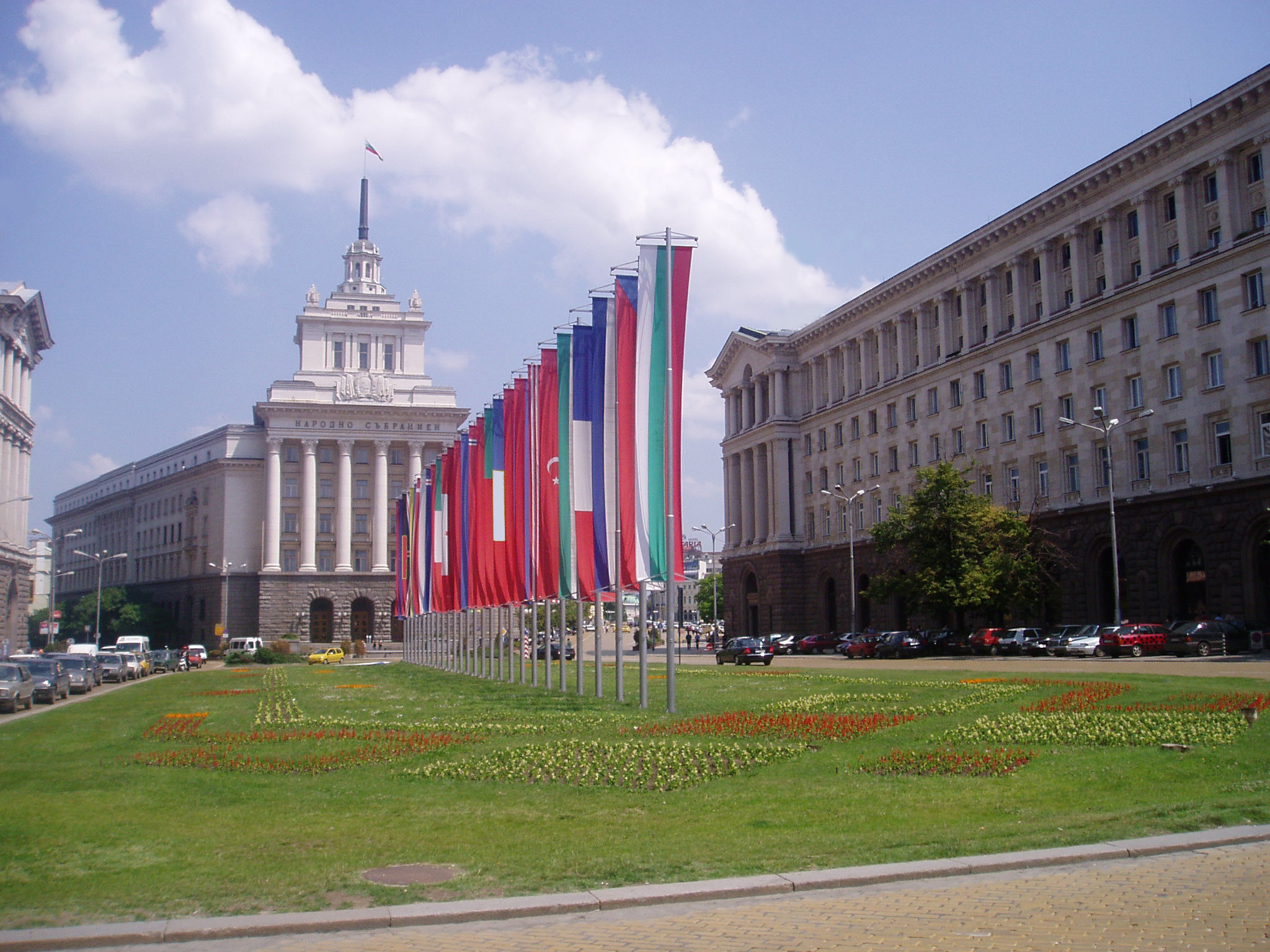
The Largo: The Monolithic Heart of Totalitarian Power
Standing in Independence Square (formerly Lenin Square) in the center of Sofia, you are enveloped by the architectural embodiment of post-war communist governance: The Largo. Constructed between 1952 and 1956 under the supervision of architect Petso Zlatev, this symmetrical triad of white-limestone palaces is one of Southeastern Europe's premier examples of Socialist Classicism (often called 'Stalin's Empire style'):
- The Communist Party House (Partiyniyat Dom): The imposing central edifice. Completed in 1954, its 40-meter central spire was topped by a glowing 3-meter synthetic ruby red star modeled directly on the Moscow Kremlin stars. On the night of August 26, 1990, during the height of the democratic transition, anti-communist student protesters stormed and set fire to the building. The ruby star was removed by helicopter on October 4, 1990. Today, the building houses committee halls and offices of the Bulgarian National Assembly.
- The Presidency & Sofia Hotel Balkan: Forming the southern wing of the Largo. In the inner courtyard stands the 4th-century Roman Rotunda of Saint George, juxtaposing two millennia of civilization. Outside the main presidential entrance on the hour, travelers gather to photograph the ceremonial changing of the National Guard in their 19th-century red-and-white hussar-style tunics and eagle-feathered caps.
- The Council of Ministers: The northern wing, currently housing the executive cabinet of the Prime Minister of Bulgaria.
The Museum of Socialist Art: Lenin's Exiled Sanctuary
While many post-communist countries dismantled and melted down their bronze monuments, Bulgaria took a more curatorial approach. In September 2011, the Ministry of Culture inaugurated the Museum of Socialist Art (Muzey na Sotsialisticheskoto Izkustvo) in the Iztok district, creating a fascinating open-air archive of Cold War propaganda aesthetics:
The Outdoor Sculpture Park
77 Monumental StatuesWander among 77 colossal bronze and granite figures that once commanded Bulgarian city centers. Towering above them all is the 9-meter bronze statue of Vladimir Lenin, sculpted by Soviet artist Lev Kerbel, which stood in central Sofia from 1970 until 1990. Nearby stand busts of Karl Marx, Friedrich Engels, Georgi Dimitrov, and idealized shock-workers holding hammers and sickles.
The Party House Ruby Red Star
Original Spire RelicDisplayed at the entrance of the sculpture park sits the original illuminated ruby-red star that crowned the spire of the Communist Party House from 1954 to 1984. Fabricated from faceted synthetic ruby glass with internal lighting conduits, its monumental scale (3 meters across) is astonishing when viewed up close at ground level.
The Indoor Exhibition Hall & Cinema
Socialist Realism & NewsreelsInside the gallery hall, examine original Socialist Realist easel paintings portraying heroic collective farm workers, industrial factory triumphs, and partisan battles. A cinema projection room continuously plays archival black-and-white Bulgarian newsreels and state propaganda broadcasts from the 1950s through 1980s.
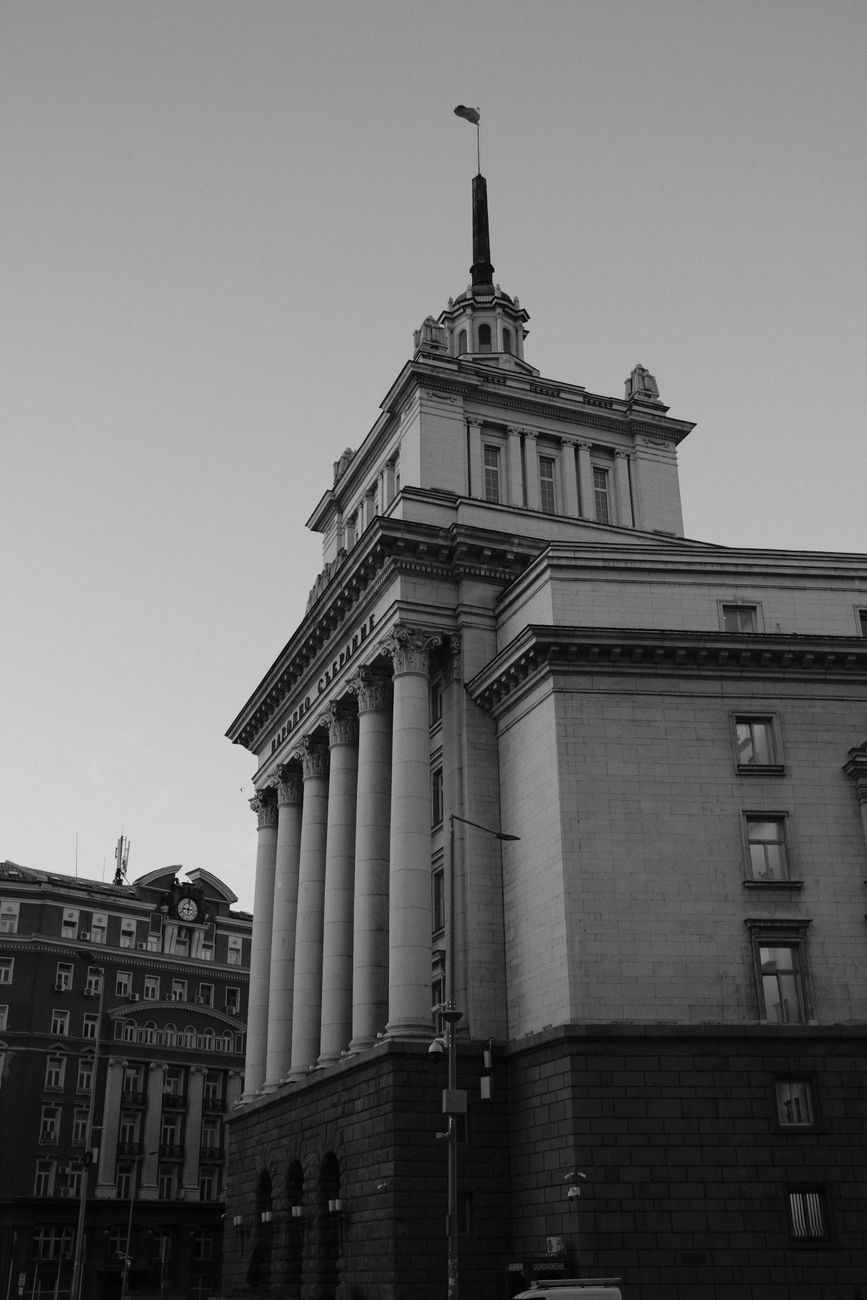
Recommended Communist Walking Tours in Sofia
Walk the streets with certified historians who lived through the socialist era and the 1989 transition.
 Communist Era History Deep-Dive
Sofia Communist Walking Tour
- The monumental Largo complex: Former Bulgarian Communist Party Headquarters
- Site of the Georgi Dimitrov Mausoleum and its controversial demolition history
- Former State Security (Darzhavna Sigurnost) secret police headquarters
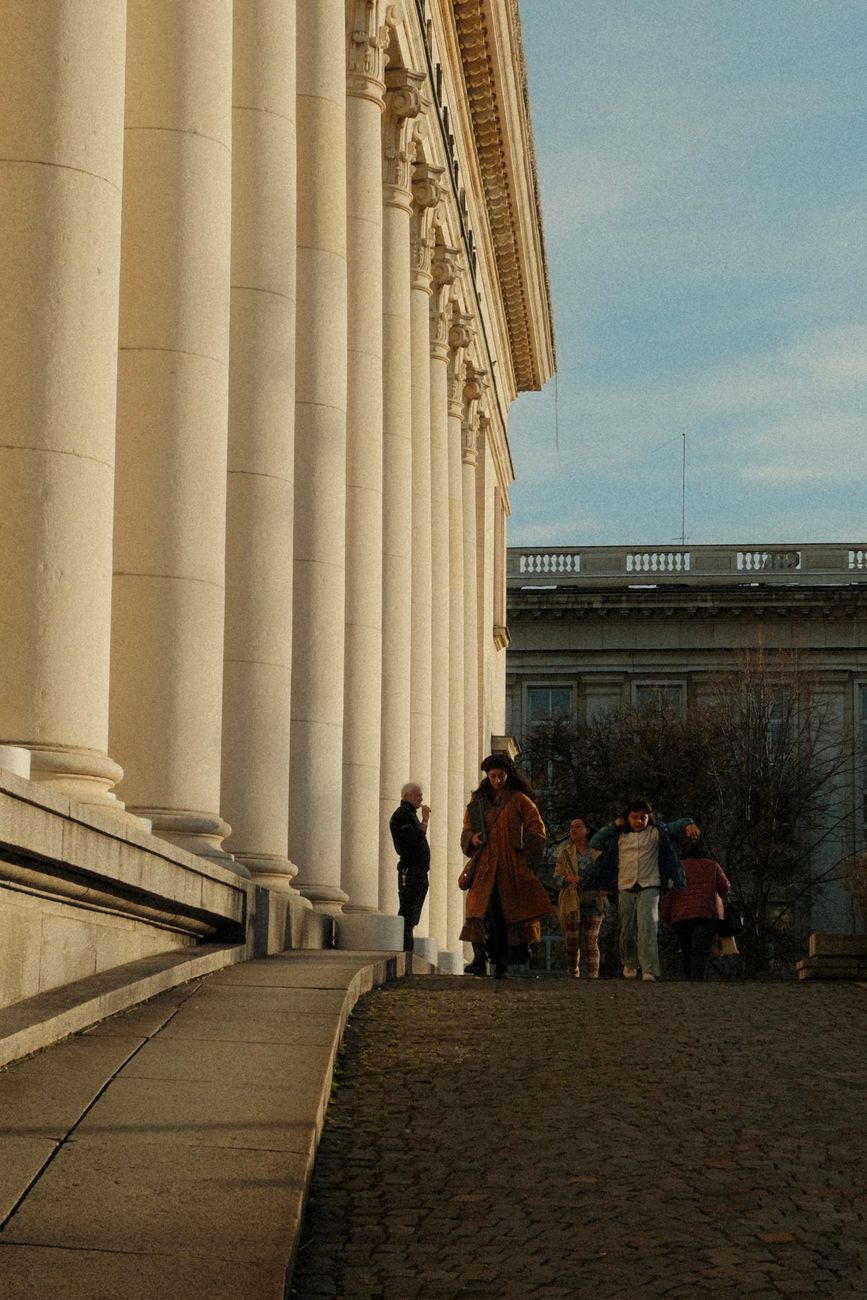
Free Tour of the Historic Centre of Sofia
- In-depth 3-hour architectural circuit along Sofia's yellow cobblestones, the Royal Palace grounds, and hidden Orthodox shrines.
Sofia Communist Walking Tour
The monumental Largo complex: Former Bulgarian Communist Party Headquarters
Frequently Asked Questions About Sofia
Verified answers to practical visitor inquiries regarding Sofia tourism, prices, safety, and cultural etiquette.
The Museum of Socialist Art is located at 7 Lachezar Stanchev Street in the Iztok district. To get there by public transit, take Metro Line 1 or Line 4 to G.M. Dimitrov Metro Station. From the station exit, walk approximately 600 meters northeast along Lachezar Stanchev Street past the Sopharma Business Towers. Admission is €3.00 or €2.00 on Thursdays.
The colossal 9-meter bronze statue of Vladimir Lenin, which towered over central Lenin Square (now Independence Square / Saint Nedelya) from 1970 until the collapse of the regime in 1990, was removed after peaceful protests. Today, it stands as the centerpiece exhibit in the outdoor sculpture park of the Museum of Socialist Art. In 2000, the 24-meter copper and bronze Monument to Saint Sofia was erected on Lenin's original stone pedestal.
The Largo is an imposing architectural ensemble in the geographic center of Sofia, designed in the 1950s in classic Stalinist-Empire style. It encompasses three massive administrative structures: the central former Communist Party House (now used for parliamentary committees), the Council of Ministers, and the President's Office (which incorporates the luxury Sofia Hotel Balkan). Beneath the Largo's modern glass roof lies the excavated Roman city of Ulpia Serdica.
Yes, the specialized Sofia Communist Walking Tour (conducted by the 365 Association and GetYourGuide) operates weekly. It provides a deep, fact-checked historical exploration of life behind the Iron Curtain, the secret police apparatus (Darzhavna Sigurnost), socialist architecture, Trabant cars, and the 1989 revolution. GuruWalk also offers dedicated Cold War free tours.
Constructed in 1954 in Knyazheska Garden, the Monument to the Soviet Army featured a 37-meter stone obelisk topped by a Soviet soldier flanked by a Bulgarian worker and mother. In 2011, the monument gained global internet fame when anonymous street artists repainted the bronze soldiers as American pop-culture superheroes (Superman, Joker, Captain America) labeled 'In Step with the Times'. In December 2023, following safety evaluations and decades of political debate, Sofia Municipality dismantled the upper bronze sculptural group for structural restoration and planned relocation to the Museum of Socialist Art.